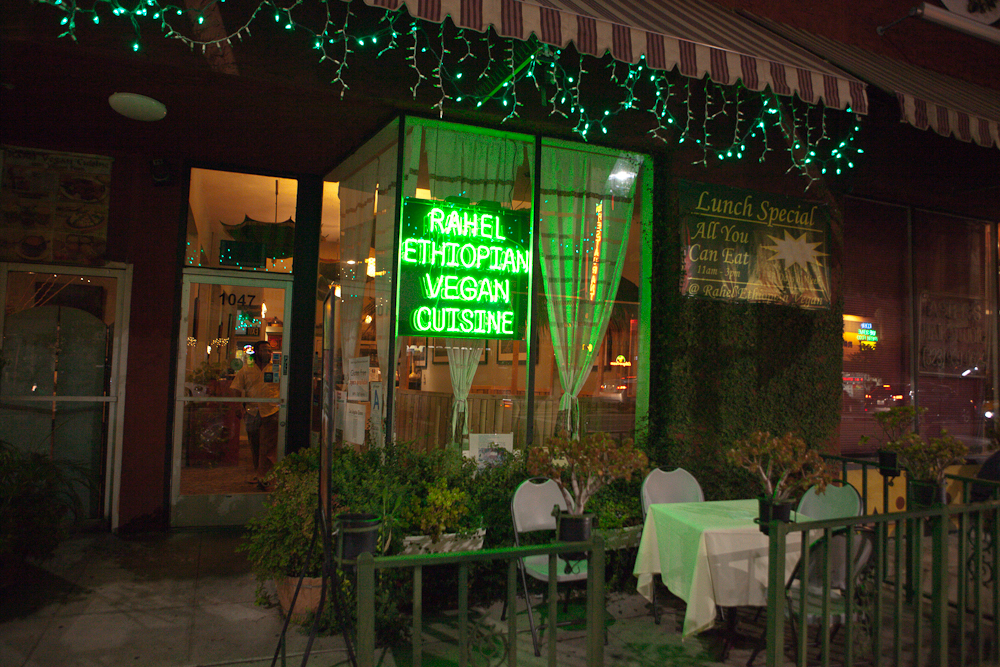
Ode to Rahel Vegan Ethiopian
I love Ethiopian food.
From my first adventurous bite of teff injera, a sour flatbread that I always seem to end up overindulging in, to loading up my place the night before my graduation with awaze tibs, a stir-fried beef in spicy sauce. If I say that I “know a spot” in Los Angeles, chances are I’m most likely talking about one of the restaurants in the along Fairfax Avenue in the Little Ethiopia neighborhood. Ethiopian scratches a culinary itch that no other cuisine seems to be able to.

One of the family members is strictly vegetarian - no meat under any circumstances. After tagging along with this family member to vegetarian and vegan restaurants for however many years I’m alive, the thing that I find “strict” vegetarians struggle the most with is finding a dish to sustain them within the majority of restaurants in America.
Close your eyes and imagine the quintessential American foods. Images of picnic hamburgers, ball game hotdogs, orange chicken, and steak houses may have conjured up in your mind. It certainly did in mine. In the typical American dining world, a vegetarian is often forced to eat in isolation - stuck with the vegetarian mainstays of a side salad or place of fries while everyone else shares “real” food. That isolation is why I wanted to bring this family member to Ethiopian food.
Ethiopian cuisine is built on a beautiful foundation of sharing. All meals are served family style and you expect to touch the flatbread others have ate from before. Every person shares the primal experience of ripping off a piece of flatbread, hover it over a warm pile of wot (Ethiopian for stew) because the spice is lingering in your throat, and decide to continue eating it because it’s that good. But when the communal platter is loaded with meat wot, the shared experience disappears for a strict vegetarian. Fear of cross contamination turns what should be a ritual of connection into isolation. To have to tell my family member that they can’t participate in this experience is disheartening. Rahel Vegan Ethiopian was the first place where I could bring this family member to experience Ethiopian food without having to cut off a portion of the teff injera or fix a plate for them before hand.
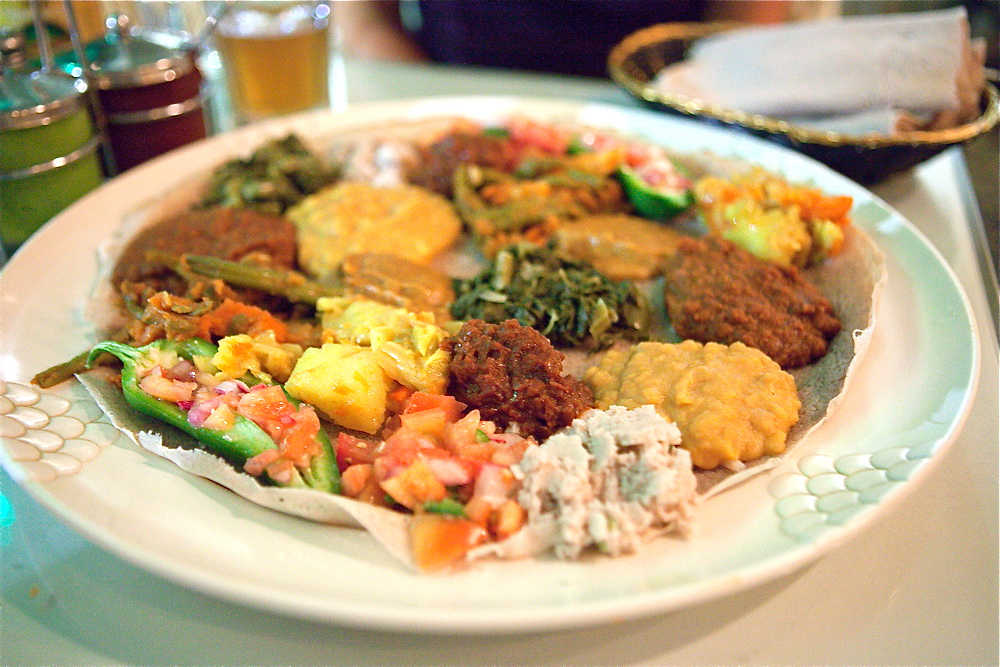
As a meat eater myself, walking in to a 100% vegan restaurant felt like a compromise. In order to bring my family member along, I would restrict my palate to a subset of “food”. I couldn’t have been more wrong. The potatoes and carrots were juicier than some pieces of expensive steak I’ve eaten. The lentils were more creamy than some milk-laden mashed potatoes I’ve eaten.
The paradox of Rahel and of independent vegetarian cooking is that creativity thrives under restrictions. When chefs cannot rely on the crutch of meat and dairy to provide flavor, they’re forced to master spices, texture, and grains in a way mainstream cooking ignores. By stepping into a restricted space, a whole new world of eating opened up to me. We often think of dietary choices as giving things up, but intentionally narrowing the menu is sometimes the only way to discover what we’re missing.
If you want to expand your own culinary horizons, I encourage you to lean into that restriction. Support your local independent vegetarian eateries with your patronage, reviews, or maybe the most important of all, word of mouth.